Scif · Volume 4
Government and Institutional Uses
4.1 Where the standard actually lives
The previous volumes treated the SCIF as an abstraction — a set of protections (physical, acoustic, visual, emanation), a governing document (ICD 705 and its IC Tech Spec), and a bureaucracy of authorizing officials and security managers. This volume asks the concrete question an engineer eventually asks of any specification: where is it built, and what does the built article look like? The answer is that the United States government operates SCIFs at every scale from a single windowless conference room to an entire campus of several million square feet, and that the same four protections and the same accreditation lifecycle scale across all of them. A tent in a Korean airfield and the room beneath the West Wing are, in the eyes of the standard, the same category of object: an accredited volume inside which Sensitive Compartmented Information may be handled. What differs is how permanently the four protections are engineered in, and how much the physical realities of a battlefield, an embassy on hostile soil, or a Boeing airframe are allowed to relax them.
A useful mental model before the tour: the government does not think in terms of “rooms that happen to be secure.” It thinks in terms of accredited space versus everything else. A facility either carries a current accreditation from an Authorizing Official against ICD 705 — meaning its construction drawings, its acoustic test, its access-control and alarm systems, and (where required) its TEMPEST posture have all been inspected and signed off — or it does not, and if it does not, no SCI crosses its threshold regardless of how solid the walls look. That binary is what makes the survey below coherent. It is also what makes the failures instructive: the 2019 congressional episode was a security incident precisely because the room was accredited and the people entering it broke the operating procedures that accreditation depends on.
4.2 The Intelligence Community: campuses that are one continuous vault
Start at the top of the pyramid. The headquarters of the major intelligence agencies — CIA at Langley, NSA at Fort Meade, the Defense Intelligence Agency at Joint Base Anacostia-Bolling, the National Geospatial-Intelligence Agency at Fort Belvoir’s NGA Campus East, and the National Reconnaissance Office at Chantilly — are not buildings that contain SCIFs so much as buildings that are SCIFs. The industry term of art is that the entire structure, or an entire wing of it, is accredited as a single Closed Area or SCIF, so that the perimeter of the building coincides with the perimeter of the accredited volume. An analyst walking down an interior corridor at Fort Meade has not left the SCIF; the corridor is inside it. The badge readers, mantrap turnstiles, and cleared-personnel screening happen at the building line, and once past them the occupant is standing inside a facility whose walls, ceilings, floors, HVAC penetrations, and — for the sensitive cores — electromagnetic shielding were all built and accredited to the standard.
This “whole building is the vault” approach is efficient at scale, and it changes the internal geometry in a way an engineer will appreciate. Because the outer shell already provides the perimeter protection, the interior can be laid out as ordinary open-plan office floor — cubicles, break rooms, cafeterias — rather than as a warren of individually hardened rooms. NSA’s original 1960s complex and its later blue-glass towers, the sort of thing that shows up in every documentary establishing shot, are enormous accredited spaces where the RF and acoustic hardening lives in the building envelope and in the copper-shielded cores, not in every partition. Within such a campus there is still a distinction the standard cares about: SCI workspaces, where compartmented material is actually handled, versus collateral spaces, cleared for Secret or Top Secret but not for the compartmented programs. The two are separated by internal accreditation boundaries, additional access control, and often by the more demanding acoustic and emanation treatment. The visible manifestation, to anyone who has toured one, is the proliferation of red-and-white “no lone zone” and cover-sheet placards, the color-coded network drops (RED and BLACK kept rigorously apart, per the separation doctrine covered in the shielding volume), and the GSA-approved security containers standing in for what a bank would call a vault.
The DoD side mirrors this. Combatant-command headquarters, the intelligence directorates (the J2 of any major command), service intelligence centers, and the alphabet of joint intelligence operations centers all run on accredited SCI space, much of it built to the same ICD 705 baseline that governs the civilian agencies. The Pentagon itself contains a great deal of accredited space, including the National Military Command Center. Where the DoD diverges is in the parallel world of Special Access Programs, whose facilities — SAPFs, pronounced “sapphs” — are accredited under a related but distinct set of standards (the DoD’s SAP manuals rather than ICD 705 proper). To an engineer the SAPF and the SCIF are near-identical construction problems; the difference is jurisdictional, a matter of which authority accredits and which compartmentation rules apply, not of whether the walls are built differently. The construction crews pouring the acoustic sealant do not much care which manual the inspector is holding.
4.3 The Situation Room: the marquee SCIF the public can actually see
Almost every operational SCIF interior is deliberately unphotographed. The White House Situation Room is the grand exception, and it is worth dwelling on because it is the one flagship facility for which the public record includes real, high-resolution imagery released on purpose.
The room exists because of a failure. After the Bay of Pigs debacle in 1961, President Kennedy concluded that he had been receiving intelligence too slowly and through too many filters, and directed that a dedicated crisis-management and communications center be built in the West Wing basement — famously in space that had been, among other things, a bowling alley. The “Situation Room” that resulted was less a single room than a suite: a conference room plus a 24-hour watch floor staffed by duty officers who monitor cable traffic and standing communications channels so that the President and the National Security Council can convene on no notice with current information in front of them. From an architecture standpoint it is a SCIF in the most demanding sense — buried below grade with no windows (so the visual and, incidentally, much of the acoustic and RF problem is solved by geology and the surrounding structure), fed by secure communications, and hardened so that the most sensitive conversations in the government can happen there without leaking.
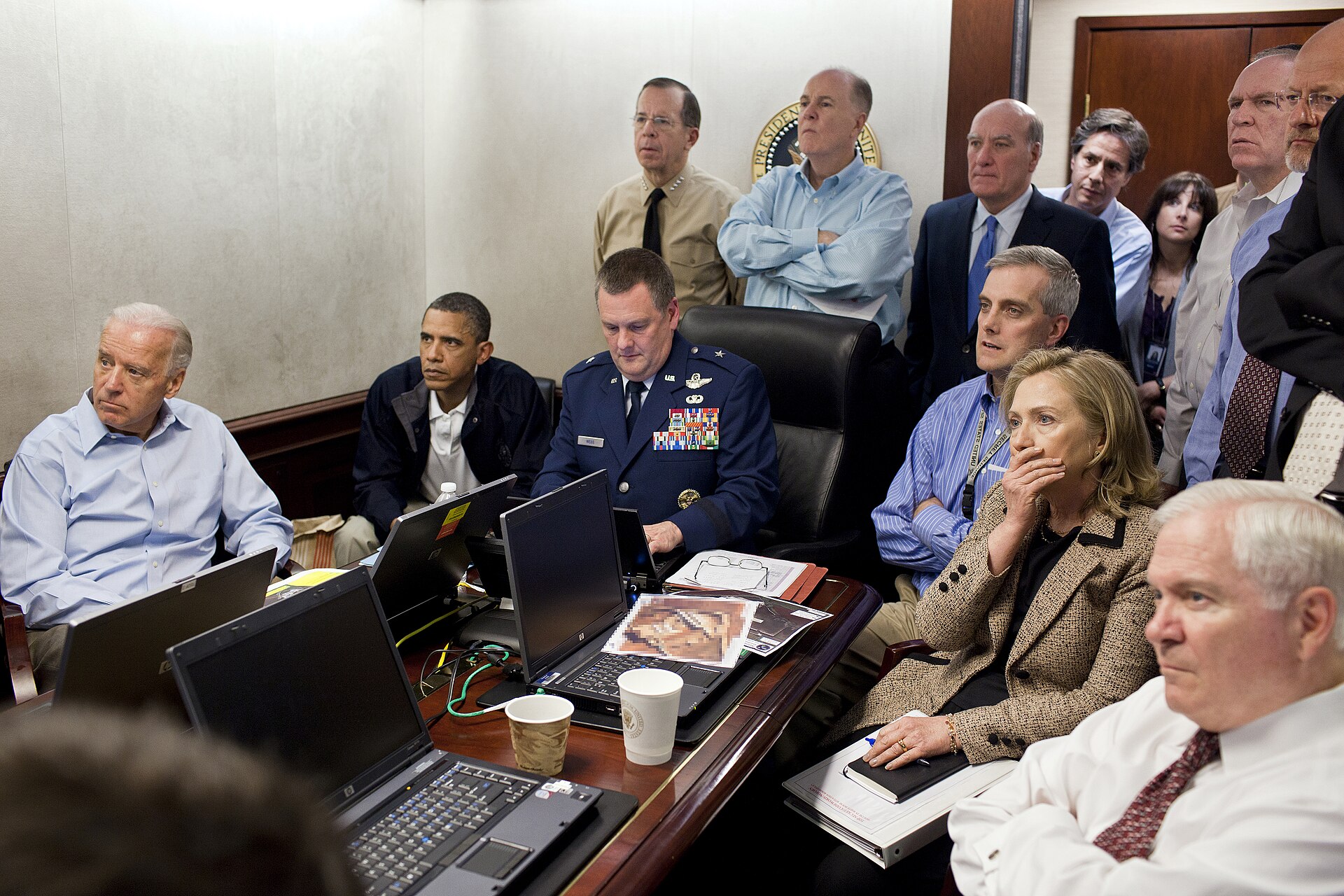
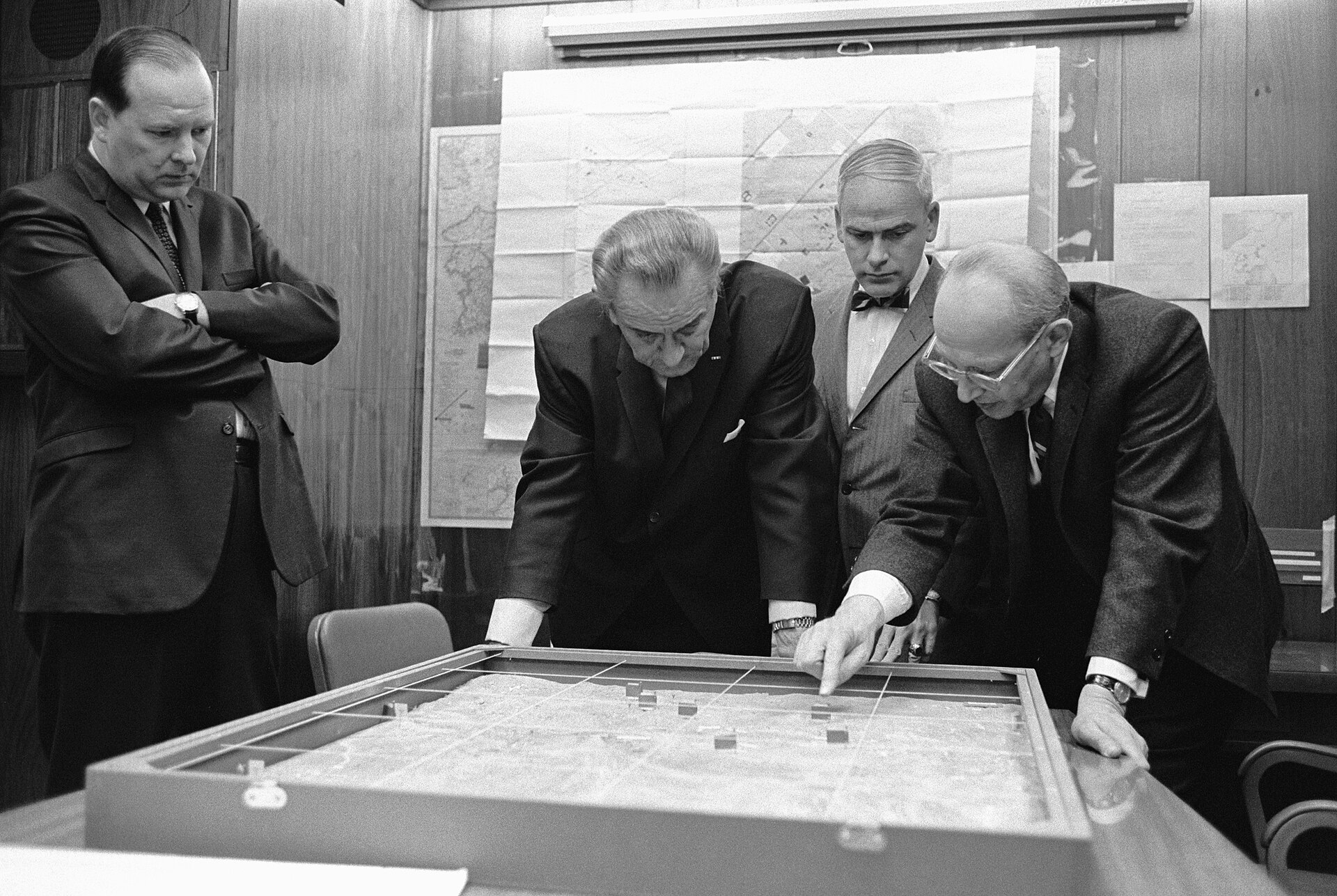
The single most famous photograph of the room — the crowd of principals watching the bin Laden raid unfold in May 2011 — is instructive precisely because it is unglamorous. The space is small, the seating is improvised, and a secure video feed occupies everyone’s attention. That feed is the point: what makes the room a SCIF is not its finish but the fact that classified video, voice, and data can be brought into it and displayed there without the emanations escaping and without an adversary listening through the wall. The room’s history stretches back further than colour photography — Lyndon Johnson used it obsessively during Vietnam, to the point of being photographed studying a terrain model of the Khe Sanh combat base.
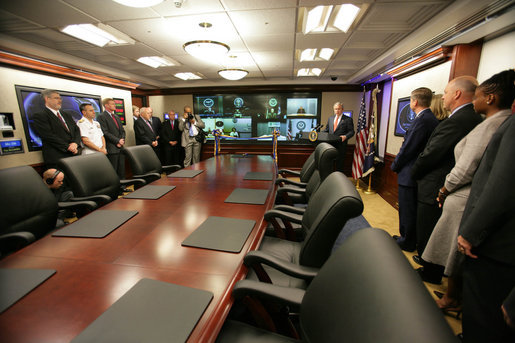
The room has been rebuilt twice within living memory, and both renovations are legible as SCIF-engineering exercises. The 2006–2007 reconstruction under President Bush was the first comprehensive modernization — new secure video-teleconferencing, flat panels replacing the old rear-projection screens, and a wholesale upgrade of the communications and information systems, all inside a space that had to remain fully shielded and accredited. The ribbon-cutting imagery from May 2007 shows the characteristic result: a windowless conference room, wood-panelled for the cameras but hardened behind the veneer, ringed with displays and secure phones.
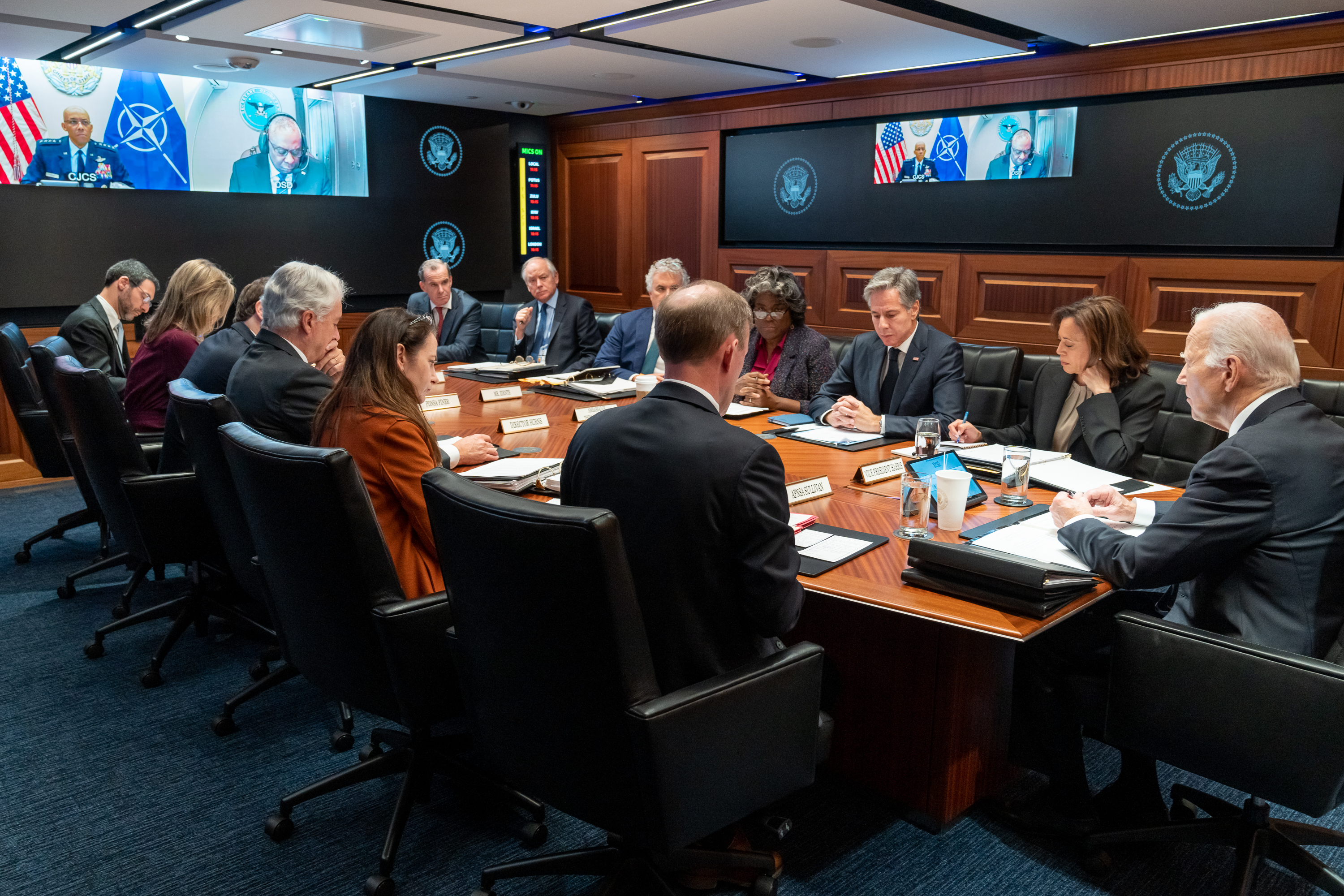
The second rebuild, completed in September 2023 after roughly a year of work at a reported cost of about $50 million, was a full gut renovation of the entire complex — not just the marquee conference room but the watch floor, the breakout rooms, and the communications infrastructure behind them. Public reporting described new mahogany panelling, upgraded displays that can pull intelligence to the table instantly, and, tellingly, security enhancements “across the board.” That last phrase is the SCIF story: a facility of this sensitivity does not get renovated the way an office does. Every penetration of the shielded envelope for the new cabling, every HVAC path, every door had to be re-engineered and the whole thing re-accredited before the President could hold a briefing in it. The public got the mahogany; the accreditation package got the shielding effectiveness tests and the acoustic measurements.
4.4 Congress: members who may only read certain things inside the fence
The legislative branch runs its own SCIFs, and they are where the abstract rule “SCI may only be handled in accredited space” becomes a daily constraint on elected officials. The House and Senate intelligence committees — HPSCI and SSCI — each maintain secure spaces for classified briefings, hearings, and the storage of classified material. The most prominent are in the Capitol Visitor Center: the House committee’s SCIF is designated HVC-304, and the Senate maintains its own secure spaces (sometimes referenced by the shorthand SVITS, the Senate secure facility). The operative fact for members is that a great deal of classified material — the underlying intelligence behind a briefing, sensitive committee documents, the raw product a member is cleared to see — may be read only inside the SCIF. A representative cannot take it back to the office, cannot photograph it, cannot discuss it in the members’ dining room. To review it, the member physically goes to the accredited room, surrenders electronic devices at the door, and reads it there.
That constraint is exactly what made the October 2019 episode a genuine security incident rather than mere theatre. During the first Trump impeachment inquiry, several dozen House members who were not on the committees conducting a closed deposition entered HVC-304 en masse — the press verb was “stormed” — and, crucially, some brought their cellphones inside and attempted to livestream and post from within. From a facility-security standpoint the phones are the whole problem. A SCIF is accredited on the premise that no uncontrolled transmitter or recording device crosses the boundary; the entire emanation- and acoustic-security posture assumes it. Bringing in a live cellular radio and a camera defeats the accreditation the way propping open a bank vault defeats the vault, and it forced a security sweep and a multi-hour delay before the deposition could resume. The incident is a clean illustration of the volume’s recurring theme: the walls are only half the SCIF; the operating procedures — devices at the door, cleared-personnel-only, controlled entry — are the other half, and they can be defeated by people who are physically standing inside a perfectly good facility.
4.5 Courts and the executive branch: from the FISA court to the kitchen table
The judiciary operates at least one SCIF of real consequence. The Foreign Intelligence Surveillance Court — the FISC, the body that reviews government applications for surveillance under FISA — has since 2009 sat in a secure courtroom within the E. Barrett Prettyman Federal Courthouse in Washington. Reporting on the facility describes the expected SCIF signatures: phones surrendered on entry, biometric access control, and a windowless, structurally hardened courtroom. The proceedings are, by design, one-sided and classified, and the accredited room is what lets a federal judge review Top Secret/SCI applications in a courthouse that also handles ordinary public litigation. The Justice Department more broadly runs extensive accredited space — the National Security Division, the FBI, and the U.S. Attorney offices that prosecute national-security cases all need somewhere to handle the evidence, and that “somewhere” is a SCIF.
The executive branch’s more idiosyncratic use is the residential SCIF. Because senior officials — the President, the Secretary of State, the Secretary of Defense, the National Security Advisor, and others who must be reachable and briefable at all hours — cannot always be at their desks, the government has for decades installed accredited secure spaces in their private residences and vacation properties. This is not exotic; it is documented practice spanning administrations of both parties. President George W. Bush had accredited space at his Crawford, Texas ranch; Secretary Clinton had SCIFs at her Washington and Chappaqua homes; and the arrangement at various Trump properties, including Mar-a-Lago, has been the subject of extensive litigation and reporting. The engineering reality behind the headlines is mundane: a residential SCIF is the same construction problem as any other — a hardened, acoustically isolated, access-controlled room built inside a house and accredited to ICD 705 — with the added awkwardness that the surrounding structure is a private home not under continuous government control, which is precisely why the standard is fussy about who controls the space, how the material is stored, and what happens to the accreditation when the official leaves office. The classified-document controversies that have dogged multiple recent principals are, at bottom, disputes about material that either was or should have been confined to accredited space and was not.
4.6 Embassies and the overseas problem: building secure on someone else’s soil
Diplomatic posts are where SCIF doctrine collides with the hardest version of the threat model, because the building sits on foreign ground, is often constructed at least partly by local labor, and is a standing target for the host nation’s intelligence service. The canonical secure space inside an embassy is the “screen room” — historically a shielded, RF-tight enclosure, effectively a room-within-a-room, in which the most sensitive conversations and cryptographic work take place. The broader concept is the Controlled Access Area (CAA), the portion of the post to which access is restricted to cleared Americans and inside which classified processing is permitted. Post One — the Marine Security Guard’s around-the-clock post — controls the flow of people into these areas, which is the human layer of the access-control protection the standard requires. The relationship between the diplomatic security apparatus and the Marine detachment is, in SCIF terms, the embassy’s access-control and response system made flesh.
The doctrine that governs embassy secure construction today is downstream of a specific, famous disaster: the Moscow embassy. The new U.S. chancery in Moscow, built during the Cold War with Soviet-supplied labor and materials under an ill-advised construction agreement, was discovered to be so thoroughly compromised that the structure itself had been turned into a listening device — reinforcing bars acting as antennas, bugs cast into the concrete, sensitive volumes riddled with implants. The building was so bad that officials seriously debated demolishing it. The lesson, absorbed into policy, is the principle of cleared American construction for the sensitive cores of overseas posts: the secure areas must be built, or at least finished and inspected, by cleared U.S. personnel using controlled materials, because you cannot accredit a shielded room whose rebar you did not watch being poured. This is the embassy-scale version of the supply-chain protection that runs through the whole SCIF discipline — the recognition that an adversary who controls your construction controls your emanation security no matter how good the finished drawings look. Embassy imagery is scarce for exactly the reasons that make the screen room a screen room, so this survey leans on the documented doctrine rather than interior photographs.
4.7 Mobile, tactical, and expeditionary: the SCIF that deploys
None of the above helps a division intelligence officer in a field that had no buildings last week. For that, the doctrine provides the Tactical SCIF — the T-SCIF — an accredited facility stood up for a limited time where permanent construction is impossible. The T-SCIF is the honest edge case of the whole standard, because it openly trades permanence for expediency: the four protections are still required, but they are provided by whatever the theater allows — a hardened building or bunker if one exists, a truck-mounted or towed military shelter, a prefabricated modular trailer, an ISO-container conversion, or, at the austere end, a tent inside a controlled perimeter. What makes it a SCIF rather than merely a guarded tent is that it is still accredited — a security officer still signs off on its layout, its access control, its guard posture, and its emanation and acoustic mitigations against the standard, and it still operates under written procedures. The concession the standard makes to reality is that a tactical facility’s protections may be procedural and temporary (guards, controlled perimeter, generator power, cover and concealment) where a fixed facility’s would be structural and permanent.
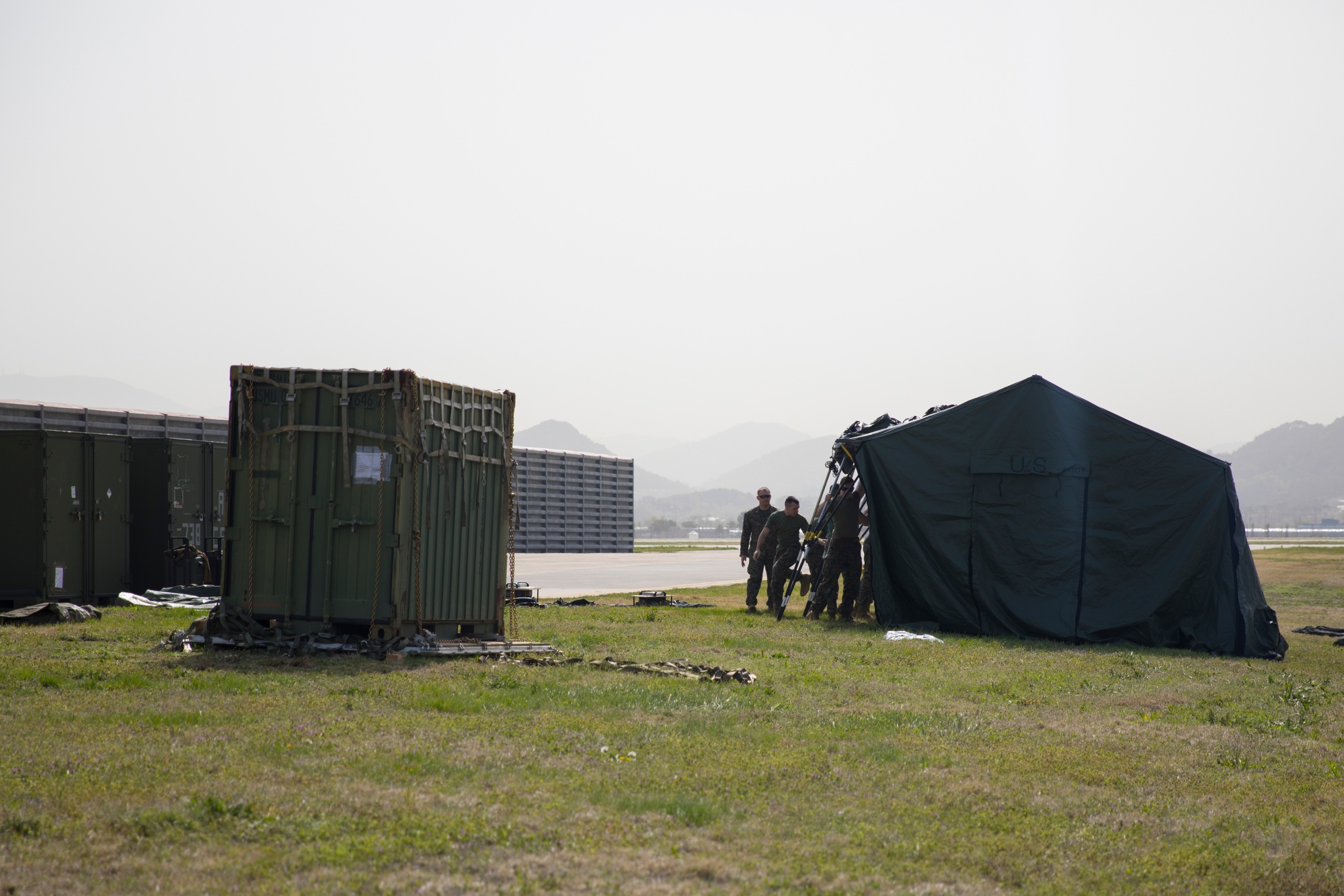
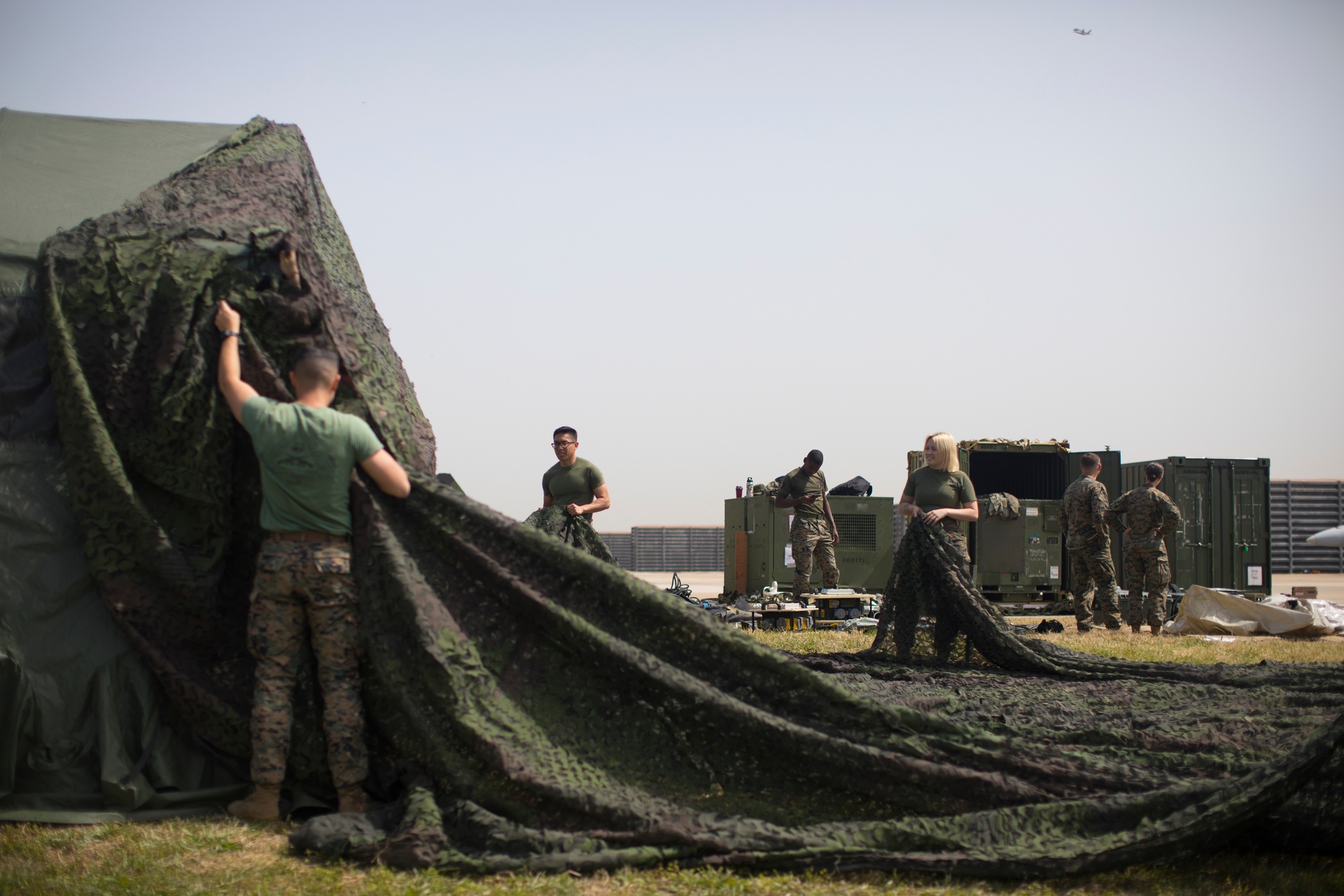
The more capable expeditionary variants are the transportable shelters and containers that the signal and intelligence communities move by truck, trailer, or aircraft. Expeditionary signal battalions field the transportable satellite terminals and shelters that carry the secure networks forward, and dedicated deployable SIGINT and collection systems — the long-serving TROJAN family among them — put a self-contained secure processing capability on wheels. The commercial market that supplies these is substantial and openly advertised: modified 10-, 20-, and 40-foot ISO containers built to ICD 705, with the acoustic (STC-rated), RF-shielding, intrusion-detection, and access-control features engineered in at the factory, so that a “SCIF on wheels” can be craned into position and accredited far faster than a stick-built room. The trailer versions are sometimes deliberately disguised as ordinary office trailers, foyer and all, so that the accredited volume hides inside an unremarkable box — a nice inversion of the fixed-facility instinct to make the vault look like a vault. The engineering trade is always the same: a container gives you a repeatable, factory-tested shielded shell at the cost of floor area and the logistics of moving several tons of hardened steel.
4.8 Airborne and afloat: the flying and floating SCIF
Aircraft and ships present the SCIF problem in its most constrained form, because the “building” is an airframe or a hull whose structure the security engineer does not get to specify. The government solves it anyway, at two very different levels of ambition.
The modest level is the presidential aircraft. Air Force One (the VC-25) carries a conference room that was originally conceived as an airborne situation room and is used for staff meetings and secure work aloft, backed by an extensive secure communications suite that lets the President command and be briefed from the air. It is not a marquee shielded chamber in the sense the ground Situation Room is, but the aircraft as a platform provides secure voice and data, and the sensitive spaces aboard are treated as controlled space in flight.
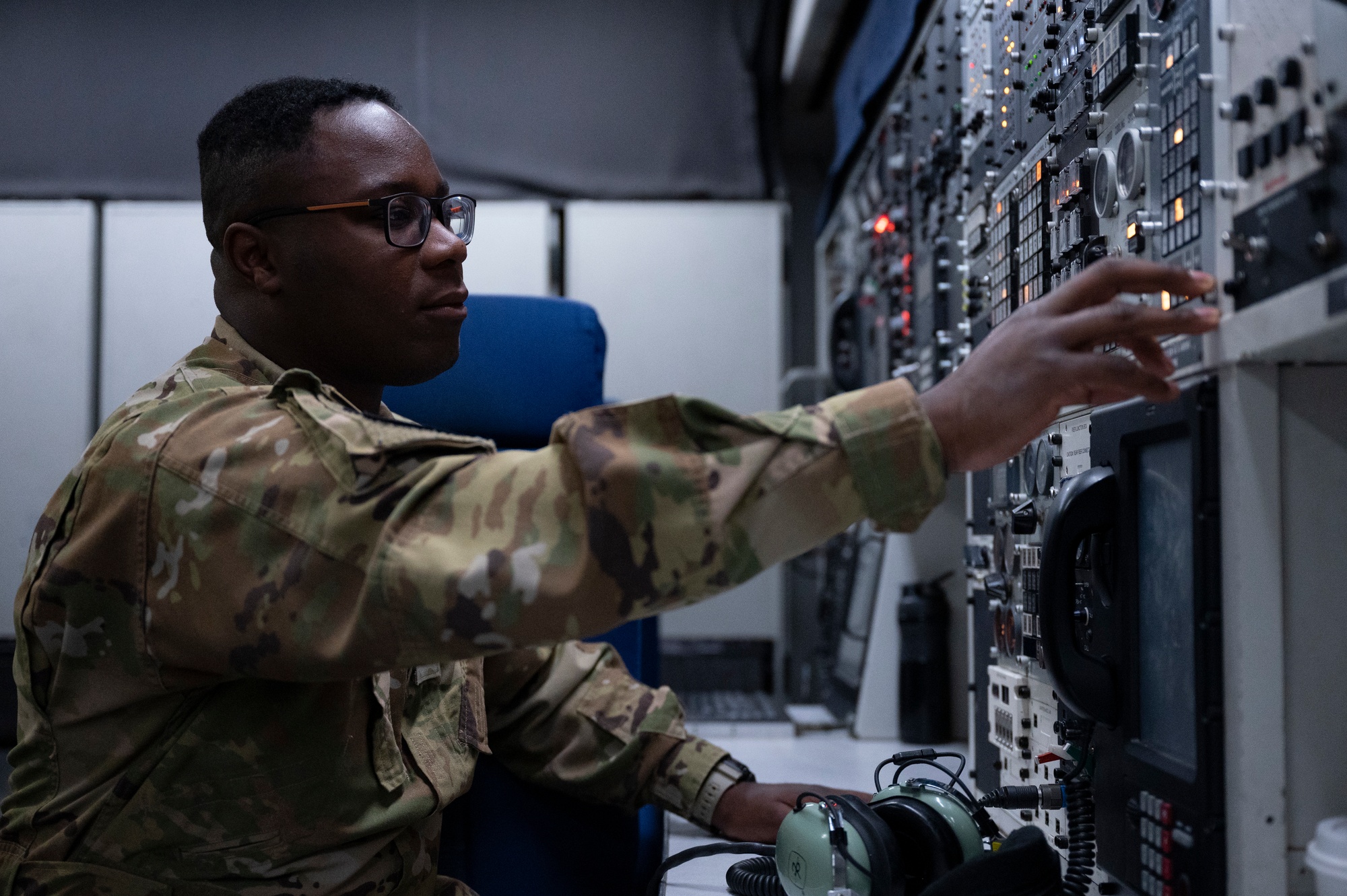
The ambitious level is the E-4B Nightwatch, the National Airborne Operations Center — the “doomsday plane.” Four heavily modified Boeing 747s serve as an airborne command post for the President, the Secretary of Defense, and the Joint Chiefs, built to keep the national command authority functioning through a nuclear exchange. The interior is organized into six functional areas — a national command work area, a conference room, a briefing room, a battle-staff operations area, a communications area, and a rest area — with seating for a crew of up to 111. The communications area is the heart of the aircraft and, in effect, a flying SCIF: it is where the secure, survivable, hardened links that let the aircraft act as a command node are terminated and worked.
At sea, the same logic produces the shipboard secure space. Command ships and aircraft carriers carry accredited compartments — a flag command center or intelligence space aboard a carrier, the secure planning spaces aboard an amphibious command ship — where a battle staff handles SCI. The naval version brings its own hard constraints: the “walls” are the ship’s steel structure, the acoustic and RF problem is bounded by compartment bulkheads and dedicated shielding, and the whole thing has to survive the vibration, motion, and damage-control realities of a warship. A carrier’s supplementary and sensitive compartmented spaces are, functionally, SCIFs that go to sea.
4.9 Continuity of government and VIP protection
The final category is the one the government prefers not to discuss in detail: the SCIFs that exist so that decision-making survives a catastrophe. Camp David, the presidential retreat in Maryland, includes secure facilities that let the President conduct classified business away from Washington, and the retreat has hosted its share of consequential secure meetings. Beyond it lies the continuity-of-government architecture — the hardened relocation sites and the alternate command centers whose existence is public even where their details are not (the Cold-War-era Mount Weather and Raven Rock complexes being the best-known). These are, among many other things, very large accredited facilities, engineered so that the same SCI that flows through the West Wing can flow through a mountain if it has to. The residential and VIP SCIFs discussed earlier belong to the same continuity impulse at the individual scale: keep the principal briefable and connected wherever the principal is, because a national-security decision cannot wait for the principal to drive back to an accredited room.
4.10 What actually makes each of these a SCIF
Run back through the tour with an engineer’s eye and the same short checklist survives every change of scale, platform, and setting. A tent in Korea and the room under the West Wing are the same category of thing because each satisfies — in structural terms where it can, in procedural terms where it must — the four protections and the one piece of paper:
- Accreditation. Every space above, without exception, either carries a current ICD 705 (or SAP-manual) accreditation from an Authorizing Official or it is not a SCIF, whatever it looks like. The accreditation is the load-bearing fact; the mahogany and the steel are implementation details.
- Physical protection. Provided by geology and a controlled building line at Fort Meade and the Situation Room, by cleared-American construction and the Marine guard at an embassy, by a controlled perimeter and a guard force at a T-SCIF, and by the airframe or hull afloat.
- Acoustic protection. Structural sound isolation in a fixed facility; STC-rated shelter walls in a container; distance, cover, and procedure in a tent.
- Visual protection. Solved trivially below grade or windowless (the Situation Room, the FISC courtroom), and by siting, netting, and blackout everywhere the geology does not cooperate.
- Emanation protection. Shielded cores and RED/BLACK discipline in the fixed campuses, factory-built RF shielding in the deployable containers, and the hardened, survivable communications suites of the E-4B — described here only at the level of the openly published concept, because the actual TEMPEST limits remain classified.
- Access control and operating procedures. Badge readers and mantraps at the agencies, phones-at-the-door at the FISC and on the Hill, Post One at the embassy, the guard force at the tactical site. The 2019 congressional episode is the standing reminder that this layer is not decorative: a perfectly accredited room stops being a SCIF the moment someone walks a live cellphone into it.
That is the throughline of the entire government estate. The standard does not care whether the volume is a bowling alley converted for Kennedy, a 747, a shipping container, or a mountain — it cares whether the four protections are present, whether the operating procedures are followed, and whether an Authorizing Official has signed the accreditation. Everything else, from the cost of the Situation Room’s new panelling to the color of the camouflage netting, is the government solving the same engineering problem in whatever medium the mission happens to hand it.
Sources
- Situation Room — Wikipedia, Situation Room: history (Kennedy 1961, post-Bay-of-Pigs origin, West Wing basement), 2007 and 2023 renovations, watch-floor function. https://en.wikipedia.org/wiki/Situation_Room
- PBS NewsHour, “Inside the White House Situation Room’s $50 million upgrade” (2023): scope, cost (~$50M), one-year timeline, security enhancements. https://www.pbs.org/newshour/nation/inside-the-white-house-situation-rooms-50-million-upgrade
- CNN Politics, “White House completes $50 million revamp of high-security Situation Room” (Sept. 8, 2023). https://www.cnn.com/2023/09/08/politics/situation-room-makeover-white-house/index.html
- CBS News, “Situation Room in White House gets $50 million gut renovation” (2023). https://www.cbsnews.com/news/situation-room-white-house-remodel/
- Wikimedia Commons, Category: White House Situation Room (2007 ribbon-cutting photo; LBJ 1968 Khe Sanh photo). https://commons.wikimedia.org/wiki/Category:White_House_Situation_Room
- Wikimedia Commons, Obama and Biden await updates on bin Laden (Pete Souza, May 1, 2011, public domain). https://commons.wikimedia.org/wiki/File:Obama_and_Biden_await_updates_on_bin_Laden.jpg
- ASIS International, “Storming SCIF Causes Security Breach on Capitol Hill” (Oct. 2019): HVC-304, cellphones inside, security sweep and delay. https://www.asisonline.org/security-management-magazine/latest-news/today-in-security/2019/October/Storming-SCIF-Causes-Security-Breach-on-Capitol-Hill/
- CNN Politics, “Everything you need to know about the secure room at the center of the impeachment inquiry” (Oct. 23, 2019): HVC-304, SCIF operating rules for members. https://www.cnn.com/2019/10/23/politics/what-is-a-scif
- Roll Call, “GOP ‘storm the SCIF’ stunt could jeopardize classified briefings” (Nov. 15, 2019). https://rollcall.com/2019/11/15/gop-storm-the-scif-stunt-could-jeopardize-classified-briefings/
- Washington Post, “What is a SCIF? Explaining the rooms that protect U.S. top secrets” (2023). https://www.washingtonpost.com/national-security/interactive/2023/scif-room-meaning-classified/
- Wikipedia, United States Foreign Intelligence Surveillance Court: FISC relocation to the E. Barrett Prettyman Courthouse (2009). https://en.wikipedia.org/wiki/United_States_Foreign_Intelligence_Surveillance_Court
- Wikipedia, E. Barrett Prettyman United States Courthouse. https://en.wikipedia.org/wiki/E._Barrett_Prettyman_United_States_Courthouse
- Wikipedia, Sensitive compartmented information facility: documented residential SCIFs (Bush/Crawford, Clinton/Chappaqua, Trump properties). https://en.wikipedia.org/wiki/Sensitive_compartmented_information_facility
- Universal Modular Inc., “How An Elected Official Can Get a SCIF In Their Home.” https://www.umodular.com/resources/residential-scifs-for-elected-officials
- Washington Post archive, “Unbeatable Bugs: The Moscow Embassy Fiasco” (June 18, 1990): the compromised Moscow chancery, cleared-American-construction doctrine. https://www.washingtonpost.com/archive/politics/1990/06/18/unbeatable-bugs-the-moscow-embassy-fiasco/5bb6dcbf-0a61-4948-a953-e2d81085ed05/
- Air & Space Forces Magazine, “Cleaning the Bug House” (2009): Moscow embassy remediation. https://www.airandspaceforces.com/article/0912embassy/
- U.S. Department of State, “Marine Security Guards”: Post One and embassy security function. https://www.state.gov/marine-security-guards
- CDSE (Center for Development of Security Excellence), Temporary Sensitive Compartmented Information Facility (T-SCIF) Student Guide: T-SCIF definition, permissible structures, temporary/procedural protections. https://www.cdse.edu/Portals/124/Documents/student-guides/SCI101-guide.pdf
- DVIDS, “MAG-12 Marines set up T-SCIF in South Korea for KFT 23” (Cpl. Tyler Harmon, USMC, Apr. 2023). https://www.dvidshub.net/image/7766508/mag-12-marines-set-up-t-scif-south-korea-kft-23
- DVIDS, “Inside the E-4B” (SrA Reilly McGuire, USAF, Apr. 2022). https://www.dvidshub.net/image/7171290/inside-e-4b
- U.S. Air Force / AFGSC, E-4B fact sheet: six functional areas, crew of up to 111, National Airborne Operations Center role. https://www.af.mil/About-Us/Fact-Sheets/Display/Article/104503/e-4b/
- Wikipedia, Boeing E-4: E-4B Nightwatch mission and configuration. https://en.wikipedia.org/wiki/Boeing_E-4
- Wikipedia, Boeing VC-25 and Wikimedia Commons, Category: Interior of Boeing VC-25A: Air Force One conference room (originally an airborne situation room). https://en.wikipedia.org/wiki/Boeing_VC-25
- Strategic Solutions Unlimited and Kentucky Trailer product literature: ISO-container and trailer-mounted mobile SCIFs built to ICD 705 (STC ratings, RF shielding, IDS/ACS). https://strategicsolutionsunlimited.com/sensitive-compartmented-information-facility-scif/ · https://kytrailer.com/trailer/mobile-scif
- ICD 705 and the IC Tech Specs for the Construction and Management of SCIFs (public releases), for the accreditation framework and the four protections referenced throughout. https://www.dni.gov/files/Governance/IC-Tech-Specs-for-Const-and-Mgmt-of-SCIFs-v15.pdf

Comments (0)